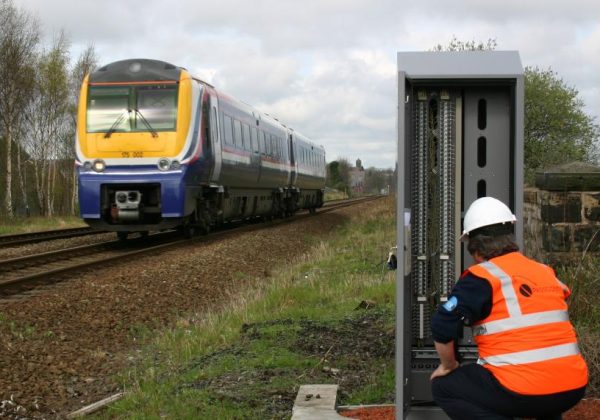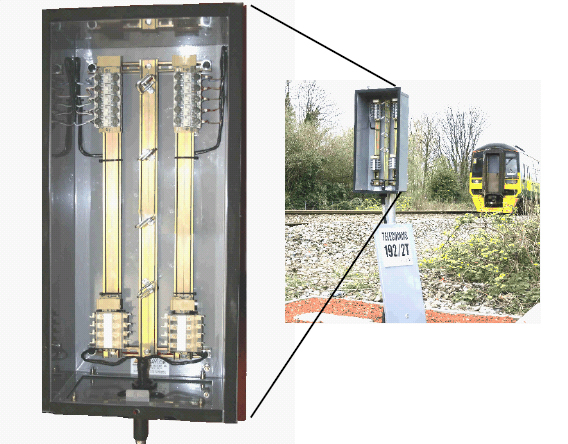
Outdoor electrical and telecommunications equipment needs protection from rain, but keeping water off the components is only one part of designing an enclosure for long-term use.
Roadside, trackside, utilities and other infrastructure locations can expose cabinets to moisture, dust, pollution, UV, temperature changes, vibration and accidental impact. Equipment inside the enclosure may also generate heat, while cables and ventilation systems can create potential routes for contaminants to enter.
Effective weatherproof electrical enclosures therefore need to be specified around the complete operating environment.
The right solution should protect equipment while also considering corrosion resistance, thermal management, cable entry, maintenance access and the expected life of the installation. A cabinet that survives a rain shower but performs poorly after several years outdoors is not providing effective environmental protection.
- Weatherproof does not simply mean keeping out rain
- Start with the equipment inside the enclosure
- Ingress protection needs to match the real environment
- Moisture can come from inside as well as outside
- Corrosion resistance matters over the whole asset lifecycle
- UV exposure can damage outdoor equipment
- Temperature can be a greater challenge than rainfall
- Ventilation creates a balance between cooling and protection
- Cable entry is a common weak point
- Vibration and mechanical stress need consideration
- Accidental impact and vandalism can affect outdoor installations
- The door and seals need to keep performing for years
- Maintenance requirements should influence the specification
- Standard electrical cabinets are not suitable for every location
- Consider whole-life cost rather than enclosure price
- Specify around the site rather than relying on a generic definition of weatherproof
- How Hybrid Connectivity approaches infrastructure enclosures
- Conclusion: weather protection is only the starting point
Weatherproof does not simply mean keeping out rain
Weather resistance is often associated primarily with water ingress.
That is understandable. Outdoor electrical equipment needs to remain protected during rainfall, and water entering an enclosure can damage electrical connections, power supplies and active network equipment.
However, outdoor conditions create several other risks.
Wind can drive water and dust towards seals and cable entries. Temperature changes can encourage condensation inside the enclosure, while sunlight can increase internal temperatures considerably during warmer periods.
Pollution, road grime and airborne contaminants may also settle around ventilation systems, door seals and exposed components.
The specification therefore needs to consider how the enclosure behaves throughout the year rather than focusing on one weather condition.
Good weatherproof enclosures provide protection against the combination of conditions likely to occur at the installation site.
Start with the equipment inside the enclosure
The contents of the enclosure should determine much of its specification.
A cabinet containing passive fibre connections has different requirements from one housing switches, power supplies and active telecommunications equipment.
Active electronics generate heat. Some equipment may also need controlled airflow, while power and communications systems can require physical separation or particular cable-management arrangements.
The amount of equipment matters too. A tightly packed cabinet may have limited space for natural air movement and can make maintenance more difficult. Leaving appropriate internal space can improve thermal performance while giving engineers better access to connections and replaceable components.
Future requirements should also be considered. If additional network equipment, fibre or power infrastructure is likely to be installed later, sufficient space and cable-entry capacity can prevent the enclosure becoming obsolete unnecessarily quickly.
The external enclosure should therefore be selected only after the internal requirements are properly understood.
Ingress protection needs to match the real environment
Ingress protection is an important consideration when specifying outdoor electrical equipment.
The required level of protection should reflect the exposure likely at the actual location. An enclosure positioned beneath shelter may face very different conditions from a roadside cabinet directly exposed to wind-driven rain, dust and passing traffic.
The complete installed cabinet needs to maintain the required protection.
This means considering not only the enclosure itself but also doors, seals, cable glands, entry plates and any ventilation openings.
A highly protected cabinet can still develop problems if poorly selected cable glands create a route for moisture or if modifications made during installation are not adequately sealed.
Specifiers should therefore consider environmental protection as a complete system rather than simply selecting a cabinet based on an enclosure rating.
Moisture can come from inside as well as outside
Preventing rainwater from entering a cabinet does not necessarily mean the inside will remain dry.
Condensation can form when temperature and humidity conditions change.
Outdoor enclosures experience repeated heating and cooling cycles. The air inside the cabinet can warm during the day and cool rapidly as external temperatures fall, potentially allowing moisture to condense on internal surfaces.
Active equipment can create additional temperature differences.
Condensation can be particularly problematic because it may appear even when seals are working correctly.
Enclosure design may therefore need to consider ventilation, pressure equalisation or other appropriate moisture-management approaches depending on the equipment and environment.
The objective should be to maintain suitable internal conditions rather than simply creating the most tightly sealed box possible.
Corrosion resistance matters over the whole asset lifecycle
An enclosure can provide effective environmental protection when initially installed but gradually deteriorate if its materials are not suited to the location.
Corrosion can affect the cabinet body, hinges, locks, mounting systems and fixings.
Roadside locations may expose enclosures to moisture, pollution and contaminants from traffic. Coastal or industrial environments can create additional corrosion risks.
Material selection should reflect these conditions.
Appropriately coated metals can perform well in many applications, while stainless steel may be preferable where exposure is particularly demanding or long-term corrosion resistance is a priority.
The entire assembly needs consideration.
Using a durable enclosure material while specifying unsuitable hinges, bolts or brackets can simply move the weakest point elsewhere.
Good weatherproof enclosure design considers how all exposed materials are likely to perform throughout the intended life of the installation.
UV exposure can damage outdoor equipment
Sunlight creates another long-term challenge.
Outdoor enclosures can be exposed to UV radiation every day for years. Some plastics, coatings, seals and labels can gradually become brittle, fade or lose performance if they are not designed for prolonged outdoor use.
This can affect both functionality and maintenance.
A degraded seal may eventually compromise environmental protection, while faded identification labels can make equipment more difficult for engineers to work on safely.
The enclosure material and every externally exposed component should therefore be suitable for expected UV exposure.
This is especially important for installations in open roadside, trackside and utilities environments where there is little or no natural shading.
Temperature can be a greater challenge than rainfall
Weatherproofing often concentrates on water, but temperature can have just as much influence on equipment reliability.
A cabinet exposed to direct sunlight can become considerably warmer internally than the surrounding air.
If the enclosure contains network switches, power supplies or other active electronics, those components add further heat.
High internal temperatures can reduce equipment lifespan or cause electronics to shut down if operating limits are exceeded.
Cold conditions can create a different set of problems, particularly where rapid temperature changes contribute to condensation.
Thermal performance should therefore be considered at the same time as environmental sealing.
The best enclosure is not necessarily the one that prevents the greatest possible amount of air movement. It is the one that maintains appropriate conditions for the equipment it contains.
Ventilation creates a balance between cooling and protection
Allowing air to flow through an enclosure can help remove heat, but it also introduces another potential route for water and contaminants.
This creates a design trade-off.
Where passive ventilation is sufficient, appropriately protected vents may help maintain internal temperatures without introducing additional powered components.
More demanding applications may require filtered ventilation or forced-air cooling.
Filters themselves then become part of the maintenance requirement. In locations exposed to brake dust, roadside pollution or general airborne debris, filters can become contaminated and restrict airflow if they are not maintained.
Cooling requirements should therefore be considered alongside the environmental conditions and expected maintenance regime.
Adding ventilation without understanding what is in the surrounding air can simply replace a temperature problem with a contamination problem.
Cable entry is a common weak point
Cables need to enter and leave almost every electrical enclosure, making cable entry one of the most important parts of environmental protection.
Poorly specified glands or entry systems can create routes for moisture, dust and other contaminants.
The position of the entry matters as well.
Where possible, cable routes should avoid configurations that encourage water to track towards openings. Suitable glands, seals and strain relief should then protect the entry while securing the cable mechanically.
Installers also need enough space to work properly.
Overcrowded entry plates can make effective sealing more difficult and leave little capacity for additional cables later.
For infrastructure applications, it can be useful to consider future expansion at this stage by providing suitable spare entry capacity without leaving unused openings exposed.
A well-designed cabinet protects the transition between the external cable network and the controlled environment inside.
Vibration and mechanical stress need consideration
Outdoor infrastructure is not necessarily static.
Trackside cabinets can experience repeated vibration from passing trains, while roadside equipment may be affected by heavy traffic and movement transmitted through the surrounding structure.
Wind can create additional mechanical loading on exposed installations.
Over a long operational life, repeated vibration can affect enclosure fixings, internal components and cable connections.
The mounting system therefore forms part of the overall specification.
Cabinets should be securely supported using suitable brackets or foundations, while internal components and cables should be appropriately restrained.
Hinges, locks and door mechanisms also need to withstand repeated use and environmental exposure without becoming loose or difficult to operate.
Weather protection alone has limited value if mechanical deterioration creates another source of failure.
Accidental impact and vandalism can affect outdoor installations
Some outdoor enclosures are installed in relatively secure infrastructure locations. Others may be accessible from public roads, footpaths or open land.
This introduces risks beyond the weather.
Accidental vehicle impact, attempted unauthorised access and deliberate damage may all need consideration depending on the site.
Enclosure construction, locks and mounting arrangements can help provide suitable physical protection.
Positioning matters as well.
Where practical, equipment can be located to reduce exposure to passing vehicles or other likely sources of impact while retaining safe access for maintenance teams.
The appropriate level of protection should reflect the actual risk rather than automatically overengineering every cabinet.
For accessible roadside infrastructure, however, physical security should form part of the specification from the beginning.
The door and seals need to keep performing for years
The most frequently operated part of many enclosures is the door.
Every maintenance visit places some additional wear on hinges, locks and seals. Over time, deterioration in these areas can compromise environmental protection.
Door systems should therefore be robust enough for the expected maintenance frequency.
Seals need to remain effective after repeated opening and closing, while hinges should resist corrosion and maintain correct alignment.
The enclosure should also allow engineers to open and secure the door safely while working.
A weatherproof cabinet that becomes difficult to access may encourage poor maintenance practices or significantly increase servicing time.
Long-term performance depends on balancing reliable sealing with practical access.
Maintenance requirements should influence the specification
No outdoor enclosure is completely maintenance-free.
Engineers may need to inspect seals, clean ventilation filters, check fixings or replace equipment inside the cabinet.
A good design makes these tasks straightforward.
Components requiring regular attention should be accessible without dismantling unrelated systems. Doors and panels should provide sufficient working space, while internal cable management should allow individual items to be reached safely.
This becomes particularly important for roadside and trackside assets. Maintenance access may require traffic management, railway possessions or other controlled working arrangements. Every unnecessary minute spent at the cabinet can therefore increase operational costs.
Reducing maintenance requirements starts with durable materials and reliable components, but good accessibility is equally important when intervention is eventually required.
Standard electrical cabinets are not suitable for every location
Off-the-shelf enclosures are appropriate for many projects.
However, infrastructure installations often create unusual physical constraints.
A roadside cabinet may need to fit within a restricted verge. Trackside equipment may have clearance requirements, while tunnel infrastructure can be constrained by available profiles and existing services.
Standard dimensions, door arrangements or cable-entry positions may simply not work.
Trying to force a catalogue enclosure into an unsuitable location can result in awkward mounting, compromised accessibility or unnecessary modifications that affect environmental protection.
In these situations, a modified or bespoke enclosure can provide a more practical solution.
The purpose of customisation should not simply be to create a different-looking cabinet. It should solve a genuine environmental, spatial or operational problem that a standard enclosure cannot address effectively.
Consider whole-life cost rather than enclosure price
The initial cost of a weatherproof enclosure can represent a relatively small part of its lifetime cost.
Corrosion, water ingress, overheating or poor accessibility can result in repeated engineer visits and premature equipment replacement.
For infrastructure assets, those visits may be expensive.
Roadside maintenance can require traffic management, while rail infrastructure may require controlled access or possessions. The operational cost of reaching a cabinet can easily exceed the cost of the component being replaced.
A more durable enclosure may therefore represent better value even where its initial purchase price is higher.
Whole-life assessment should consider expected lifespan, maintenance frequency, corrosion resistance, thermal performance and the ease with which internal equipment can be serviced or upgraded.
The cheapest box is not necessarily the lowest-cost asset.
Specify around the site rather than relying on a generic definition of weatherproof
There is no single enclosure specification that is ideal for every outdoor application.
A cabinet installed beside a motorway has different risks from one beside a railway, inside a tunnel or on an exposed industrial site.
The most effective approach is therefore to assess the specific location.
Consider the expected water and dust exposure, temperature range, UV, pollution and corrosion risk. Then look at the equipment itself: how much heat will it produce, how will cables enter and how often will engineers need access?
Mechanical risks such as vibration and accidental impact should be assessed alongside these environmental factors.
This produces a specification based on how the enclosure will actually be used rather than simply selecting a product described as weatherproof.
How Hybrid Connectivity approaches infrastructure enclosures
Hybrid Connectivity supports telecommunications and electrical infrastructure across demanding transport and critical-infrastructure environments.
This includes enclosure solutions developed around the practical requirements of trackside, roadside and wider connectivity applications.
Rather than considering environmental protection in isolation, enclosure requirements can be assessed alongside internal equipment, cable management, fibre termination, power requirements, thermal performance and maintenance access.
Hybrid’s wider capabilities across fibre connectivity, integrated cabinets, assemblies and infrastructure products also provide an understanding of how the enclosure fits into the wider network.
For projects where a standard cabinet does not meet the physical or environmental requirements, purpose-designed solutions can address specific installation constraints while providing the protection required for long-term operation.
Conclusion: weather protection is only the starting point
Outdoor electrical enclosures need to keep equipment protected from the weather, but effective environmental protection goes much further than stopping rain from reaching the components inside.
Moisture, condensation, dust, UV, temperature changes, corrosion and vibration can all influence long-term reliability.
The enclosure also needs to manage the heat produced by active equipment, maintain sealed cable entries and provide practical access for maintenance.
For roadside, trackside and other infrastructure applications, these requirements should be considered together.
Well-specified weatherproof electrical enclosures create a controlled environment around critical equipment while remaining durable, maintainable and suitable for the site in which they are installed.
Ultimately, the best weatherproof enclosures are not those that simply survive bad weather. They are the ones designed to protect equipment reliably throughout years of real-world operation.